

ARFFS CAT 8
CIVIC INFRASTRUCTURE
Location: Queensland - multi site
Status: Design Development
Client: Airservices Australia NexGen
Value: Confidential
Role: Architecture | Interior Design
OPPORTUNITY
Airservices Australia provides critical aviation rescue and fire-fighting services at airports across the country. As existing facilities approach the end of their operational life, the challenge extends beyond replacing individual stations. Airservices needed a smarter, more consistent approach to delivering infrastructure across a national portfolio.
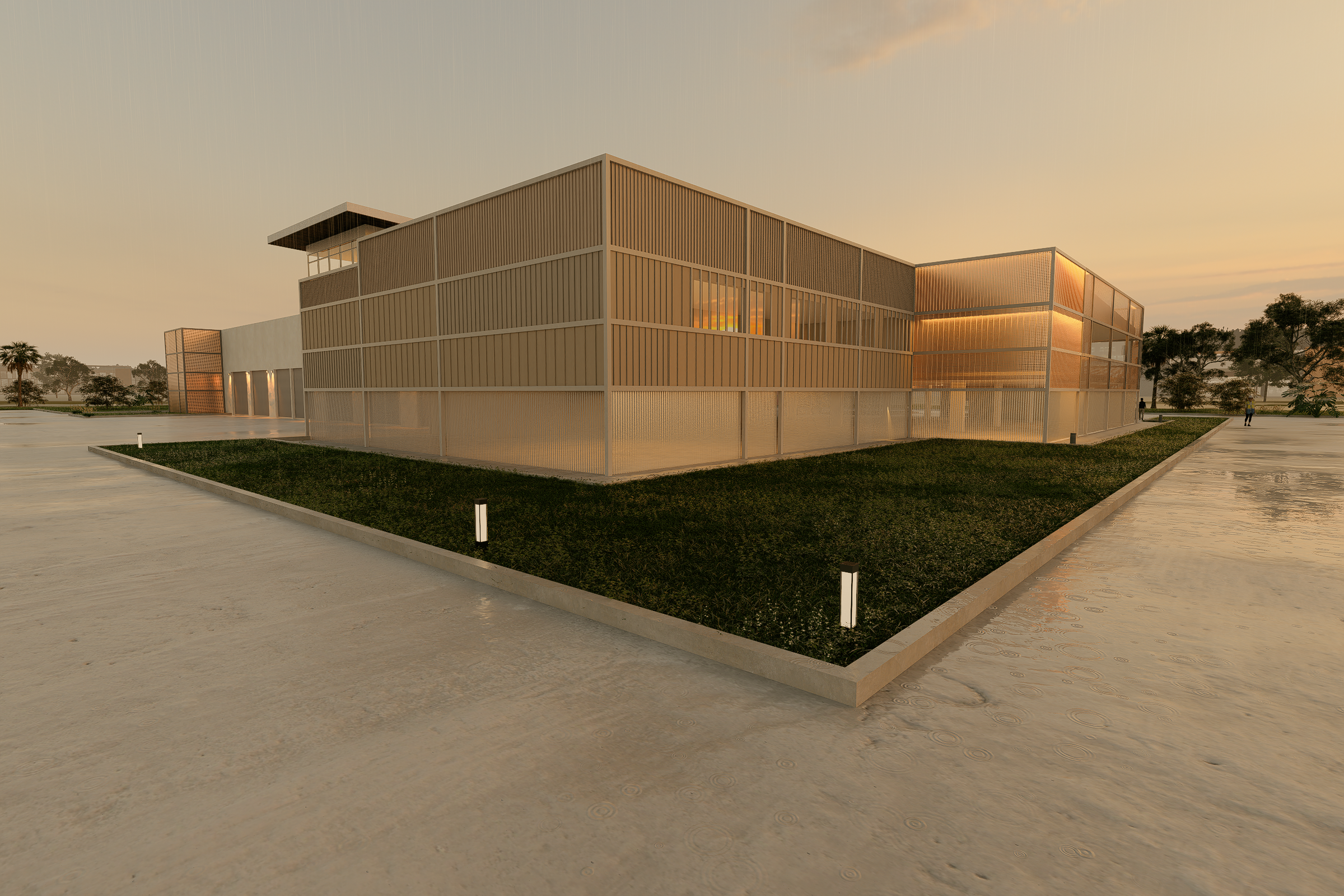
The opportunity was not to design a single fire station. It was to create a scalable delivery platform — one capable of being deployed across multiple airport locations, adapting to different site conditions and airport classifications, while reducing construction risk, improving efficiency, prioritises consistent response and operations and supports long-term asset performance.
DISCOVERY
The project began with the people who use the facilities every day.
Extensive consultation with fire crews, operational teams and stakeholders across multiple locations revealed a consistent set of priorities. Operational readiness, crew wellbeing, visibility, safety, functionality and equality were fundamental to the success of every station, regardless of geography or airport size.
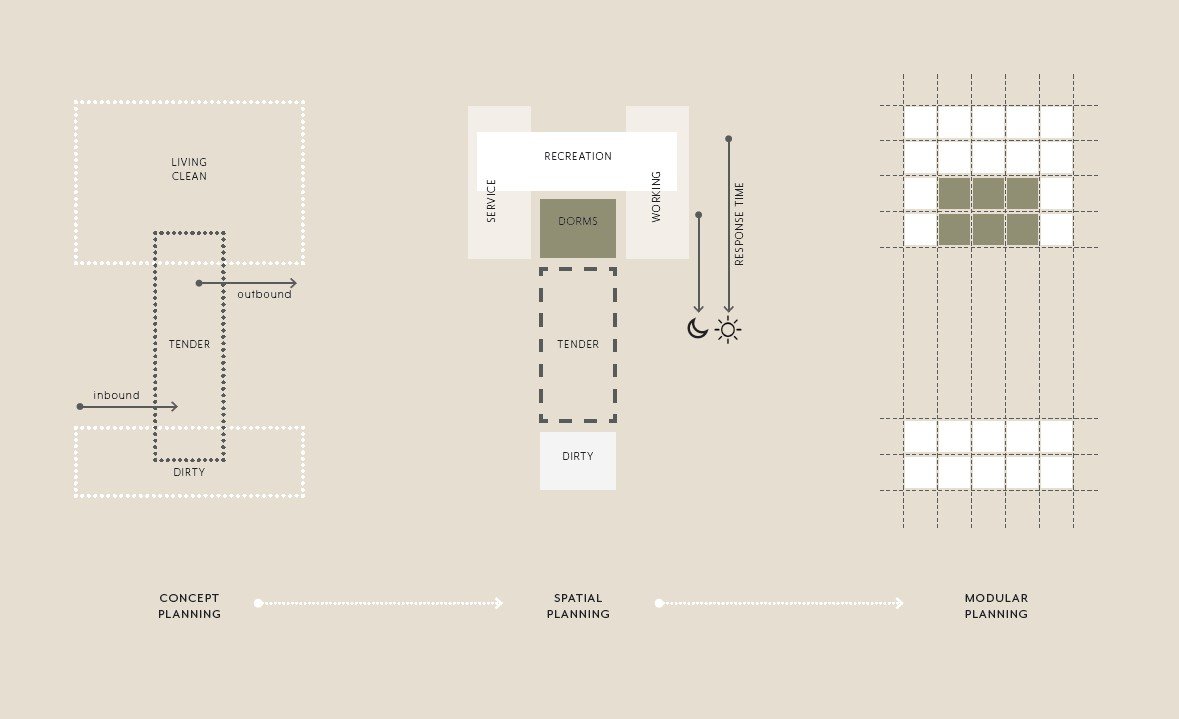
These conversations reinforced an important principle: consistency matters. When crews move between locations, familiarity improves efficiency, reduces operational friction and supports emergency response. The station needed to feel intuitive regardless of where it was deployed.
From there, the design process focused on simplification.
Through extensive testing, prototyping and stakeholder review, a modular building system emerged that could be adapted from Category 8 to Category 10 facilities while maintaining a consistent operational framework. Integrated structural, mechanical, electrical and hydraulic systems will be designed for off-site manufacture, transport and rapid assembly.
Three-dimensional printed models were used throughout the process to test ideas, communicate solutions and refine the concept with stakeholders before progressing into documentation. The result is not a standard building, but a repeatable system capable of responding to different sites while maintaining operational consistency.
CHANGE
The project establishes a new approach to the delivery of Airservices Australia's fire and rescue infrastructure.
Rather than delivering fifteen individual projects, the strategy creates a single design platform that can be deployed nationally — reducing procurement complexity, streamlining approvals, improving quality assurance and mitigating the risks associated with labour shortages and construction variability.
The modular methodology enables faster delivery, reduced on-site disruption and greater certainty across the program. Importantly, it also creates opportunities for future adaptation as operational requirements evolve.
While the stations share a common operational framework, each deployment retains the opportunity to respond to its local context through landscape, cultural expression and site-specific identity — creating a stronger connection between national infrastructure and place.
Its success will be measured not by uniqueness, but by certainty. By creating a repeatable, scalable and operationally focused delivery model that Airservices Australia is capable of supporting emergency response infrastructure across the country for years to come.